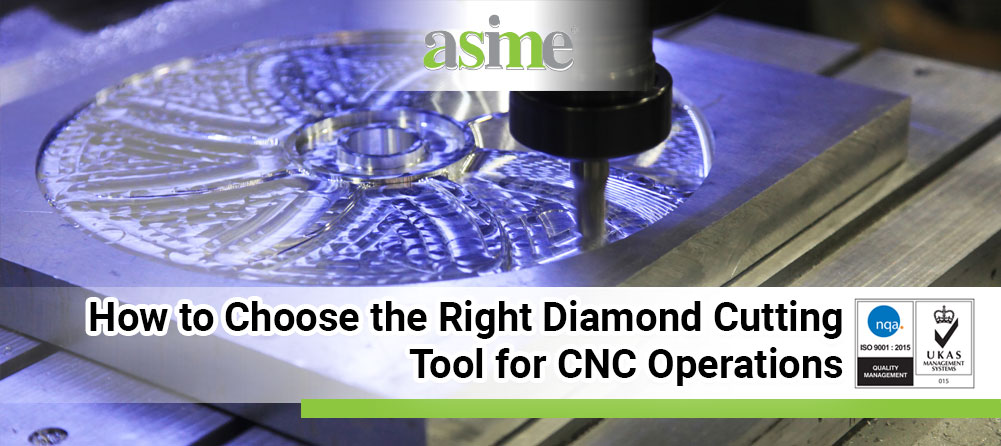
In ultra-precision manufacturing, choosing the right diamond cutting tool determines whether you achieve mirror finishes or standard results.
Many engineers rely on PCD without realizing that other cutting tools may deliver better outcomes.
This guide helps you to choose the right diamond tools for high-precision CNC machining and optimal performance.
Types of Diamond Cutting Tools You Must Know
Diamond cutting tools are advanced machine cutting tools designed for precision CNC machining.
It offers unmatched hardness, wear resistance, and surface finish quality compared to traditional carbide tools.
MCD (Mono-Crystalline Diamond) Tools
MCD tools are made from a single-crystal diamond structure, delivering the sharpest possible cutting edge.
This makes them ideal for ultra-precision applications such as optical components and mirror-finish aluminum parts in diamond turning processes.
PCD (Polycrystalline Diamond) Tools
PCD tools consist of multiple diamond crystals sintered with a cobalt binder, offering excellent toughness and wear resistance.
They are widely used in CNC machines for cutting non-ferrous metals, plastics, and wood-based composites.
CVD (Chemical Vapor Deposition) Diamond Tools
CVD tools feature a pure diamond coating applied to a carbide substrate, making them highly effective for machining abrasive materials such as CFRP, graphite, and ceramics.
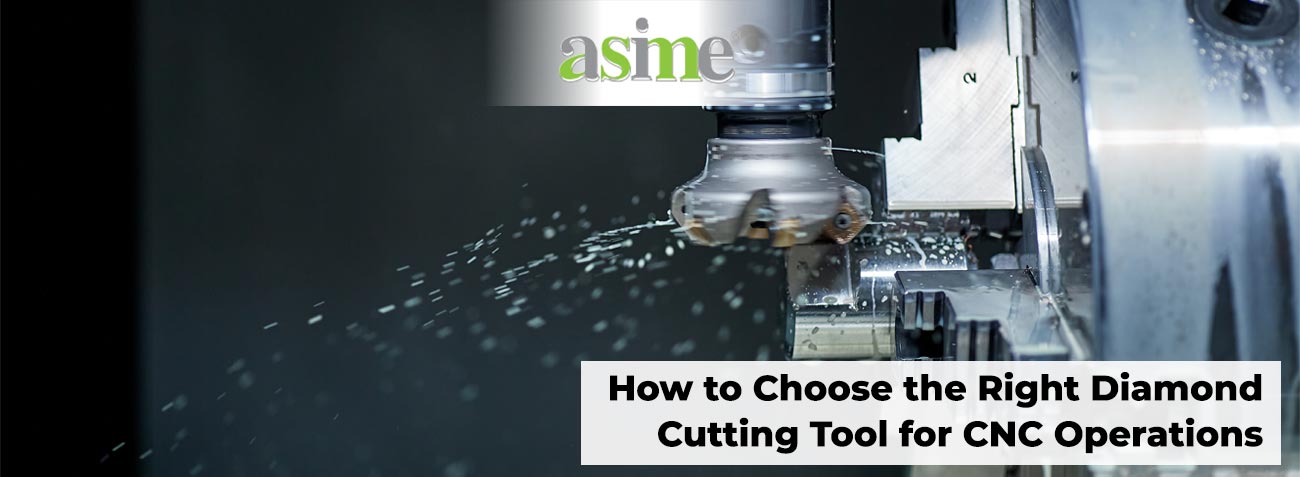
How MCD Diamond Cutting Tools Deliver Ultimate Precision
MCD-based diamond cutting tools are engineered for applications where surface finish and edge sharpness are critical.
Their single-crystal structure eliminates grain boundaries, allowing for ultra-smooth cutting action and minimal tool marks.
In precision CNC machining, MCD tools can achieve surface roughness levels as low as Ra 0.01 µm, making them essential for industries like optics, aerospace, and semiconductor manufacturing.
However, their brittleness limits their use to softer, non-ferrous materials such as aluminum and copper.
When to Use PCD Diamond Cutting Tools for Versatility
PCD diamond cutting tools are the most commonly used due to their balance of toughness and wear resistance.
Their multi-crystal structure provides durability under higher cutting loads, making them suitable for a wide range of industrial applications.
These tools excel in machining aluminum alloys, composites, and plastics, offering significantly longer tool life—often up to 50 times longer than carbide tools in abrasive environments.
This makes PCD ideal for high-volume precision CNC machining where consistency and cost-efficiency are priorities.
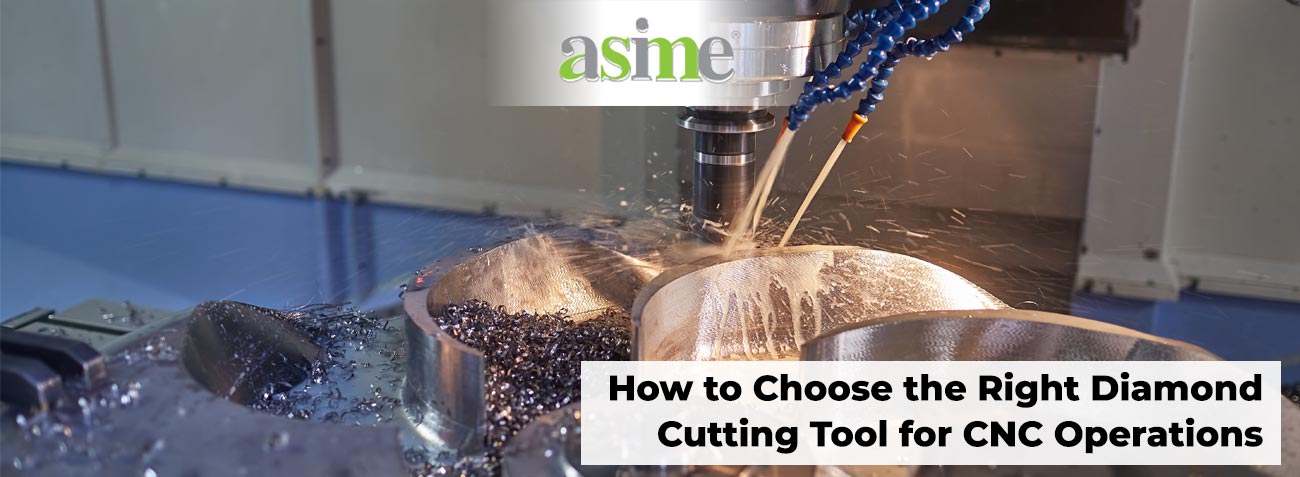
Why CVD Diamond Cutting Tools Excel in Abrasive Materials
CVD-coated diamond cutting tools are specifically designed for extreme wear environments.
The pure diamond coating provides superior hardness without the cobalt binder found in PCD, reducing chemical reactivity during cutting.
They are particularly effective in machining highly abrasive materials like carbon fiber reinforced polymers (CFRP), graphite, and ceramics.
In these applications, CVD tools can dramatically reduce tool wear rates and improve production efficiency in advanced CNC machines.
Reliable Diamond Cutting Tools for High-Performance CNC Machining
The key is matching the tool material to the application requirements, not defaulting to the most familiar option.
At Asime, we design and manufacture custom MCD, PCD, CVD, and PCBN tooling for precision manufacturers across the medical, optical, automotive, electronics, and aerospace industries.
Partner with Asime today and let our team recommend the ideal cutting tools — custom-built to your requirements.
Suggested read: The Types of Diamond Cutting Tools in Industrial Cutting