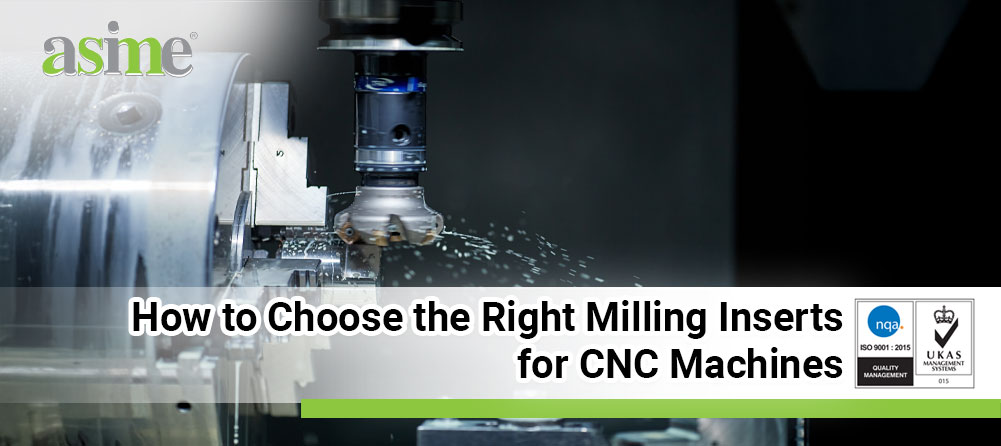
Milling inserts for CNC machines can lead to poor tolerances, chatter, and higher tooling costs in Malaysian shops.
Engineers often decide quickly. They face tight deadlines, varying material quality, and different machine capabilities. This means there’s little room for error.
Choosing the wrong insert can lead to scrap, more tool changes, and unexpected downtime. This, in turn, lowers productivity and profits.
Asime uses its machining expertise to address issues including tolerance control, vibration, and insert wear.
So how do you choose the right milling insert for consistent CNC results? Let’s explore the key factors to consider when choosing milling inserts.
What are the Different Types of Milling Inserts?
Understanding the types of milling inserts is crucial for effective milling. In fact, inserts come in various shapes and designs tailored to specific cutting conditions.
- Square: Strong edges, multiple corners; great for roughing.
- Triangular: Flexible, suitable for medium milling; limited strength for heavy cuts.
- Round: Continuous cutting edge, great for profiling and roughing.
- Rhombic (diamond-shaped): Suitable for finishing and semi-finishing; smoother surface finish.
- High-feed: Shallow depth, high feed rates, lower cutting forces.
- Special profile/form inserts: Contouring and complex geometries.
Manufacturers such as Asime provide choices in all these categories.
This allows manufacturers to pick the insert type based on the machining process. Thus, they don’t have to rely on just one insert for everything.
How to Choose the Right Milling Inserts for CNC Machines
1. Analyze the Workpiece Material
To begin with, the performance of CNC milling inserts is greatly affected by the workpiece material.
Stainless steel, aluminium alloys, cast iron, and heat-resistant alloys each respond in their own way to cutting forces and heat.
Using a general-purpose insert on all materials is a common mistake. It can lead to thermal cracking, quick wear, or a built-up edge.
Thus, choosing the right grade for the material helps tools last longer and ensures consistent results.
Asime provides inserts for various alloys and steels. As a result, this helps keep operations stable.
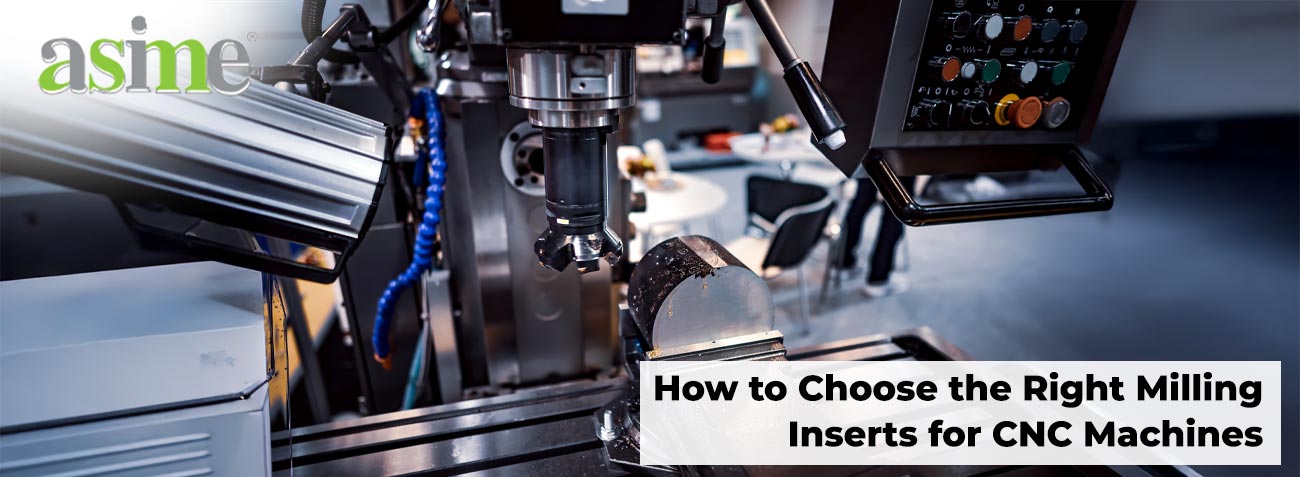
2. Determine the Type of Operation
Besides that, different milling operations stress inserts differently.
Roughing requires strong edges and good chip control. Finishing, on the other hand, needs sharp edges and low cutting forces.
Using the wrong insert for a job can lead to chatter, a rough surface finish, and unexpected rework. These problems slow down the result.
Thus, selecting inserts based on the operation increases efficiency and part quality.
Asime makes high-performance milling inserts for roughing, semi-finishing, and finishing. These tools help manufacturers optimize each part of the production process.
3. Select Insert Geometry and Shape
Insert geometry affects cutting stability, vibration, and surface finish.
Rake angle, nose radius, and chip-breaker design must fit the workpiece and machine abilities.
Large nose radii can overload machines. Sharp edges, on the other hand, wear out quickly under heavy cuts.
Understanding these trade-offs is critical when determining how you choose a milling insert.
Asime provides geometries optimized for durability and cutting efficiency.
4. Choose the Right Coating
Furthermore, coatings lower heat, friction, and wear. Choosing the incorrect coating can cause quick edge failure or unstable cutting.
Low-friction coatings prevent edges from building up on aluminium. Heat-resistant coatings help stainless steel and hardened alloys.
Correct coatings ensure steady performance. They also help achieve the best surface finish in CNC machining.
Asime uses advanced coatings made for specific machining conditions. This helps ensure reliable performance and increases tool life for various materials.
5. Consider Tool Holder and Machine Constraints
Even the best insert will be ineffective if the tool holder or machine setup is poor.
For instance, poor clamping, low rigidity, or wrong insert sizes cause vibration, size errors, and short tool life.
Making sure the insert and holder match machine specs increases precision and repeatability. This is a key benefit of using milling inserts.
Asime’s insert designs consider real-world machine limits. This leads to better fit, stability, and performance in both new and existing CNC setups.
Optimize Your CNC Milling Performance with the Right Milling Inserts
In short, choosing the right CNC milling inserts requires careful thought.
For instance, think about the material, the type of operation, the geometry, the coating, and what your machine can do.
Many production issues blamed on machines are actually caused by improper insert selection.
Teaming up with Asime gives you expert guidance and various inserts suited to your machining needs.
Contact us today to improve your tooling setup and increase productivity. You can extend tool life and get consistent, precise results on all CNC projects.
Suggested read: The Role of Threading Inserts in High-Speed CNC Machining